
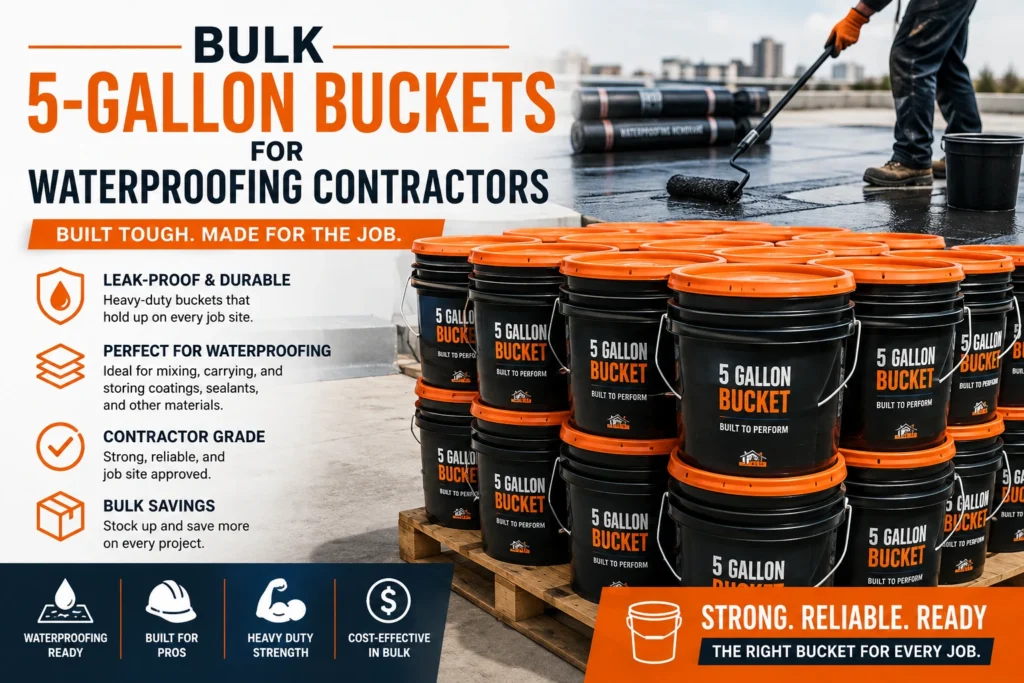
Waterproofing contractors rely on practical equipment that can perform in demanding jobsite conditions. From basement waterproofing and foundation repair to roof coatings, sealants, drainage work, and restoration projects, a dependable supply of bulk 5-gallon buckets for waterproofing contractors can help crews stay organized, reduce downtime, and control operating costs.
At Those Bucket People, we understand that contractors often need more than one or two buckets. A busy crew may use buckets for carrying materials, mixing jobsite solutions, storing tools, collecting debris, cleaning equipment, and moving supplies between vehicles and work areas. Buying 5-gallon buckets in bulk gives your business a reliable inventory for everyday work while helping you avoid last-minute supply runs.
Whether you need used buckets, reconditioned buckets, or other bulk plastic pail options, the right order depends on how you plan to use them. This guide explains what waterproofing professionals should consider before purchasing bulk 5-gallon buckets.
Why Waterproofing Contractors Use 5-Gallon Buckets
The standard 5-gallon bucket is one of the most useful containers on a waterproofing jobsite. It is compact enough for a technician to carry, large enough for many common materials and tasks, and easy to stack or load into trucks when organized correctly.
Waterproofing teams may use 5-gallon buckets for:
- Carrying non-potable water for cleaning or rinsing tools
- Mixing compatible jobsite materials when manufacturer instructions allow it
- Transporting gravel, soil, sand, debris, or small construction materials
- Holding hand tools, brushes, rollers, gloves, rags, and safety equipment
- Organizing fasteners, fittings, drain components, and accessories
- Collecting waste materials during cleanup
- Storing non-sensitive supplies in work vans, trailers, or warehouses
- Moving materials around basements, crawl spaces, foundations, and exterior work areas
For many contractors, buckets are not a one-time purchase. They are a consumable jobsite asset. Some buckets are reused for months or years, while others are assigned to specific tasks, damaged in heavy use, or left with crews at ongoing projects. Keeping bulk inventory on hand helps prevent avoidable interruptions.
Benefits of Buying Buckets in Bulk
Purchasing buckets by the pallet, truckload, or larger quantity can be more efficient than buying individual containers from retail stores. Contractors who plan ahead can build a consistent supply for field crews, warehouse operations, and seasonal workload increases.
Better Cost Control
Buying bulk 5-gallon buckets can lower the cost per unit compared with purchasing single buckets as needed. A bulk order also makes it easier to budget for supplies and avoid paying higher retail prices during urgent situations.
Fewer Jobsite Delays
When a waterproofing crew runs out of usable buckets, simple tasks can become slower. Workers may need to stop for a supply run, borrow containers, or use unsuitable alternatives. Maintaining a stock of buckets at your shop, warehouse, or yard keeps crews prepared.
Easier Crew Organization
Assigning buckets to dedicated jobs helps improve organization. For example, one bucket may be used for hand tools, another for cleanup supplies, and another for hardware or drainage fittings. Color coding, labels, or permanent markers can make this process even easier.
Reuse and Sustainability
Used and reconditioned plastic buckets can be a practical option for many non-food, non-consumer applications. Reusing suitable containers helps extend the useful life of durable plastic materials and may support a contractor’s waste-reduction goals.
What to Look for in Bulk 5-Gallon Buckets
Not every 5-gallon pail is appropriate for every application. Before placing an order, consider the bucket’s prior use, physical condition, lid availability, quantity, and your intended jobsite purpose.
Bucket Condition
Used buckets may show cosmetic scuffs, labels, residue marks, or signs of previous handling. For contractor use, the key question is whether the bucket is structurally suitable for its intended purpose.
Inspect or ask about:
- Cracks, splits, holes, or damaged sidewalls
- Weak or damaged bucket handles
- Deformed rims that may affect lid fit
- Heavy staining or excessive residue
- Brittle plastic caused by age, sunlight, or rough handling
- Whether buckets are nested or stacked for efficient shipment
If a bucket will be used only for tools, cleanup, debris, or general storage, cosmetic appearance may not matter. If you need a cleaner presentation for customer-facing work or material handling, request the condition level that best fits your needs.
Lids and Accessories
Lids are not always included with bulk 5-gallon buckets. If your workflow requires covered storage or spill prevention during transport, confirm whether lids are available and whether they fit the buckets being supplied.
Depending on the project, you may need:
- Standard snap-on plastic lids
- Gamma-style screw-top lids
- Tamper-evident lids
- Pour spouts or lid inserts
- Labels for inventory and jobsite identification
A tight-fitting lid can help keep dust, debris, rainwater, and unwanted materials out of the bucket. However, a lid should not be treated as a guarantee against leaks or spills, especially when transporting liquids. Always secure loads properly and follow applicable transportation and safety requirements.
Previous Contents
For waterproofing contractors, previous contents matter. Used buckets may have held products such as paint, coatings, food ingredients, detergents, adhesives, chemicals, or industrial materials.
Be clear about your intended use when requesting a quote. Do not use previously used buckets for potable water, food storage, or sensitive materials unless they are specifically certified and appropriate for that purpose. If you are handling regulated chemicals, hazardous materials, or manufacturer-specified products, follow all product labeling, safety data sheet requirements, and local regulations.
Quantity and Delivery Needs
A contractor who needs 50 buckets has different logistics needs than a company ordering several pallets. Before ordering, estimate how many buckets your crews use each month and how much storage space you have available.
Consider:
- Total bucket quantity needed
- Whether lids are required
- Delivery location and unloading capability
- Warehouse, yard, or truck storage space
- Whether you need nested buckets for space efficiency
- Frequency of future orders
- Local pickup versus freight delivery
Planning for usage over several months can reduce the risk of running short during a busy season.
Common Uses on Waterproofing Jobsites
A bulk bucket purchase becomes more valuable when each bucket has a clear role. Contractors can use simple labeling systems to reduce confusion and keep equipment in the right place.
Here are practical examples:
| Jobsite Need | How a 5-Gallon Bucket Can Help |
|---|---|
| Tool transport | Carry hand tools, brushes, rollers, scrapers, gloves, and small accessories |
| Cleanup | Hold rags, non-hazardous debris, disposable PPE, or cleanup materials |
| Water handling | Carry non-potable water for approved cleaning tasks |
| Material movement | Move soil, gravel, sand, broken concrete, or other jobsite materials |
| Inventory | Store fittings, drain hardware, fasteners, and small parts |
| Vehicle organization | Keep commonly used supplies separated in trucks and trailers |
| Site protection | Use as a portable container for supplies in damp basements, crawl spaces, or exterior work zones |
Always use buckets only in ways that are compatible with their condition, previous contents, and the materials being handled. For example, a bucket previously used for an unknown product should not be used to mix a waterproofing product unless the manufacturer confirms that the container is suitable.
Used vs. New 5-Gallon Buckets
Both used and new buckets can serve waterproofing contractors well, but the right choice depends on the task, budget, and required appearance.
| Factor | Used or Reconditioned Buckets | New Buckets |
|---|---|---|
| Cost | Often lower cost for bulk, non-sensitive applications | Usually higher cost per unit |
| Appearance | May have labels, scuffs, or prior-use marks | Clean, uniform, and presentation-ready |
| Best use | Tools, cleanup, debris, organization, general jobsite tasks | New material packaging, branded operations, or applications requiring unused containers |
| Sustainability | Extends the useful life of durable plastic containers | Requires new material production |
| Availability | Varies by location, quantity, and incoming supply | Often available in standardized specifications |
For many waterproofing companies, a mixed approach works well. New pails may be reserved for specific materials or customer-facing applications, while used buckets handle cleanup, tool storage, debris, and everyday field work.
How to Order Bulk Buckets for Your Crew
The best bulk bucket order begins with clear communication. A supplier can provide more useful options when they know how many buckets you need, where they are going, and how you plan to use them.
When requesting a quote, include:
- Your required quantity
- Whether you need buckets only or buckets with lids
- Your preferred condition: used, cleaned, reconditioned, or new
- Your delivery ZIP code or pickup location
- Whether you can receive palletized freight
- Your intended use, such as tools, cleanup, storage, or jobsite material handling
- Timing requirements for your project or upcoming season
If your order is large, ask about pallet quantities, freight options, lead times, and repeat-order availability. The lowest bucket price is not always the lowest delivered cost, so consider transportation, unloading, storage, and handling when comparing options.
Why Contractors Work With Those Bucket People
Those Bucket People helps businesses source bulk plastic buckets for practical commercial use. We work with companies that need a dependable supply of buckets for reuse, recycling, storage, logistics, operations, and jobsite applications.
For waterproofing contractors, the goal is simple: find a suitable bucket supply that matches your work, budget, location, and quantity requirements. We can help you start the conversation around available inventory, bulk ordering, used bucket options, and delivery needs.
Every project is different. Availability, condition, freight cost, and bucket specifications can vary, so it is important to request details before committing to an order. Our team can help you identify a practical bulk bucket solution for your crew.
Request Bulk 5-Gallon Buckets Today
If you are looking for bulk 5-gallon buckets for waterproofing contractors, Those Bucket People can help you explore options for your next project, restocking cycle, or expanding crew.
Contact us with your quantity, delivery location, lid requirements, and intended use. We will help you find a practical solution for bulk plastic buckets that supports your day-to-day waterproofing operations.
Frequently Asked Questions
Can waterproofing contractors buy 5-gallon buckets in bulk?
Yes. Waterproofing contractors can purchase 5-gallon buckets in bulk for jobsite organization, tool storage, cleanup, debris handling, and other appropriate work uses. The best quantity depends on crew size, job volume, storage capacity, and delivery needs.
Are lids included with bulk 5-gallon buckets?
Lids may or may not be included. Always confirm lid availability when requesting a quote, especially if you need buckets for covered storage, transport, or protection from dust and debris.
Are used 5-gallon buckets good for contractors?
Used buckets can be a cost-effective option for many contractor applications, including tool storage, cleanup, non-sensitive material handling, and jobsite organization. Confirm the bucket condition and previous contents before choosing used buckets for a specific task.
Can I use used buckets for waterproofing coatings or chemicals?
Only use a bucket for coatings, chemicals, or other products if it is compatible with the material and approved by the product manufacturer. Consider prior contents, cleanliness, bucket condition, and safety requirements. Do not use unknown or previously used containers for sensitive applications without confirming suitability.
How many buckets fit on a pallet?
Pallet capacity varies based on bucket size, nesting method, lids, pallet dimensions, and shipping requirements. Ask your supplier for the estimated bucket count per pallet and the total freight dimensions for your order.
Do you deliver bulk 5-gallon buckets?
Delivery options depend on your location, order quantity, available inventory, and freight requirements. Provide your ZIP code and quantity needed when requesting a quote so delivery options can be evaluated.
What should I tell a bulk bucket supplier before ordering?
Share your quantity, required delivery location, whether you need lids, preferred bucket condition, intended use, and desired delivery date. These details help the supplier recommend the most suitable option.
Are 5-gallon buckets waterproof?
A sound bucket with a properly fitted lid can help contain materials and protect contents from dust or moisture, but it should not automatically be considered leakproof or suitable for every liquid or chemical. Inspect the bucket, confirm lid fit, and use it only for compatible materials and purposes.