
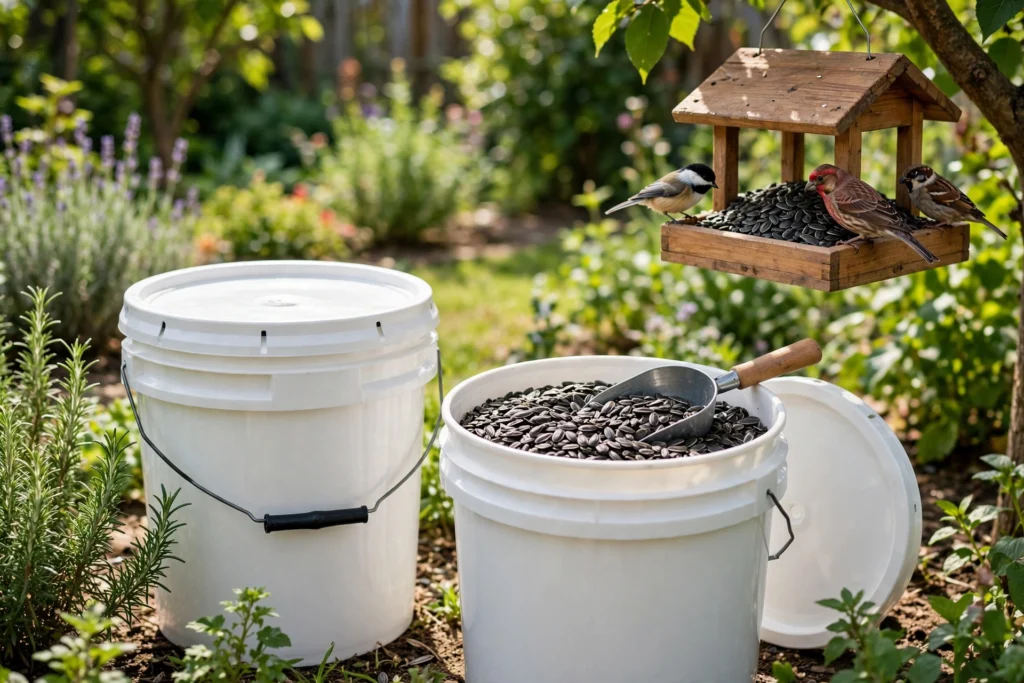
Buckets for bird seed storage are food-grade HDPE pails with airtight lids — usually 2-gallon or 5-gallon — that keep wild bird seed dry, fresh, and out of reach of mice, squirrels, and raccoons. A 5-gallon bucket holds roughly 25 pounds of black oil sunflower seed, and a gamma seal lid turns it into a pest-proof, scoop-friendly bin that keeps seed fresh for 6–12 months.
Why Bird Seed Storage Goes Wrong So Often
Bird seed is sold in paper and thin plastic bags that do almost nothing to protect it. Leave a bag on the garage floor and three things happen: mice chew through it in a night, humidity turns the oils rancid, and mold takes hold in as little as 48 hours under humid conditions. Moldy seed is not just wasted money — it produces liver-damaging mycotoxins that can seriously harm the birds visiting your yard, and wet seed can carry aflatoxins that are deadly to birds. Birds notice bad seed before you do: feeder visits quietly drop as the smell turns. The fix is not a fancier bag — it is a hard, airtight container with a lid that seals, stored cool and dry. For a full walkthrough of what spoilage looks like, see AvianBliss’s guide on how to store bird food properly.
What Makes a Good Bucket for Bird Seed Storage
A bucket built for bird seed storage earns its place in a garage or feed room on four features: (1) Airtight lid — the seal is everything. A snap lid keeps dust out; a gamma seal lid screws on and off for a truly airtight, moisture-proof seal that also survives daily scooping without wearing out. (2) Food-grade material — seed is food, so the bucket should be virgin HDPE (#2) or polypropylene (#5), FDA-compliant and BPA-free, with no recycled content of unknown origin. (3) Pest resistance — mice can chew through thin plastic, and squirrels have chewed through plastic storage bins left outdoors. Heavy-duty 90-mil HDPE walls resist most chewing; galvanized metal is the only truly chew-proof option. (4) A scoop-friendly opening — a wide mouth and a lid you can open one-handed while holding a scoop makes refilling feeders fast, which matters when you fill them daily.
Buckets for Bird Seed Storage: Comparison Table at a Glance
| Storage option | Typical capacity | Airtight? | Pest-proof? | Typical retail (2026) | Best bulk buyer |
|---|---|---|---|---|---|
| 5-gallon food-grade HDPE bucket + gamma seal lid | ~25 lb seed | Yes | Strong (90-mil walls) | ~$10–$20 per set | Wild-bird retailers, garden centers |
| 2-gallon food-grade HDPE bucket + screw-on lid | ~10 lb seed | Yes | Strong | ~$5–$10 | Backyard birders, small shops |
| Galvanized metal seed bucket (e.g. Audubon Woodlink) | 25 lb (16.5 qt) | Locking lid | Yes — chew-proof | ~$49–$56 | Retailers selling a premium storage bin |
| Basic 5-gallon bucket + snap lid | ~25 lb seed | Partial | Moderate | ~$5–$10 | Bulk buyers stocking spares |
| 6-gallon food-grade bucket + lid | ~30 lb seed | Yes | Strong | ~$12–$22 | High-volume seed sellers |
| Stackable airtight pet-food container | 12–69 qt | Yes | Indoor only | ~$15–$40 | Indoor seed rooms, multi-seed sorting |
Choosing the Right Size for Your Seed
Match the bucket to how fast the seed moves. 2-gallon buckets suit backyard birders and small shops: about 10 pounds of seed, light enough to carry to the feeder one-handed, and easy to dedicate one bucket per seed type (sunflower, safflower, nyjer, millet). See our guide to 2-gallon buckets in bulk for the full breakdown. 5-gallon buckets are the standard for retailers and serious birders: roughly 25 pounds of black oil sunflower seed per bucket, the size every lid and scoop on the market is built for, and stackable four-high when full. 6-gallon buckets work for high-volume seed sellers and wild-bird stores that buy 40–50 pound bags and decant them — fewer refills, same footprint. Whatever the size, keep one bucket per seed type: goldfinches are famously picky about old nyjer, and mixing old seed with new seed can contaminate a fresh batch if the older seed has begun to spoil.
Metal vs. Plastic: Which Survives the Pests?
This is the one decision that matters most, and the honest answer depends on where the bucket lives. Indoors (garage, basement, feed room), heavy-duty food-grade HDPE with a gamma seal lid is the best value: airtight, light, stackable, and cheap enough to buy by the pallet. Outdoors or in a shed with known rodent pressure, metal wins: the Audubon Woodlink galvanized steel seed bucket holds 25 pounds, has locking lid clamps mice cannot pry, and comes with its own scoop — at roughly $49–$56 it costs three times a plastic set but cannot be chewed through. Bird Feeder Hub’s own outdoor plastic bin was chewed open by squirrels or chipmunks, which is why they switched to galvanized steel outdoors. The practical split for retailers: sell plastic bucket sets as the everyday storage buy, and stock metal seed buckets as the premium, chew-proof upgrade. For the full metal-versus-plastic breakdown, see our guide to metal vs. plastic buckets for commercial use.
Buying Buckets for Bird Seed Storage in Bulk: What to Ask Your Supplier
Bird seed storage is a volume game for wild-bird stores, garden centers, and feed dealers — the per-unit price drops fast once you order by the case or pallet. Before placing a bulk order, confirm these details: Order buckets and lids together — mismatched lids are the number-one bucket complaint in any commercial operation, and gamma seal lids must match the bucket’s rim exactly. Check the resin — insist on virgin food-grade HDPE with the #2 recycling code; recycled-content buckets can carry odors that transfer to seed. Standardize sizes across the store — one 2-gallon bucket for small seed bags and one 5-gallon bucket for bulk bags simplifies restocking and staff training. Plan for seasonality — bird feeding peaks in winter, when high-fat seed is what keeps birds alive; order storage buckets before the fall rush so freight delays do not leave the seed aisle short. Ask about volume pricing — if you run multiple locations or a wild-bird franchise, request a quote for your actual quantities rather than paying list price.
Keeping Seed Fresh: The Rules That Matter More Than the Bucket
The best bucket in the world cannot save seed that was already stale or stored wrong. Share these rules with your customers — it is the kind of advice that brings them back to your counter: Store cool and dry, below 70°F — heat and humidity are spoilage’s best friends; past 70°F, microbial growth kicks into overdrive and seed oils turn rancid. Keep containers off the floor — a 6-inch gap stops floor moisture and makes it harder for rodents to reach the lid. Do not stockpile — buy what the birds can eat within two weeks in hot, humid weather and four weeks in cold weather; seed kept dry and airtight stays fresh up to six months, but the oils fade after that. Use the oldest seed first — label every bucket with the purchase date and never mix old seed into a new batch. Inspect before every refill — fresh seed smells lightly nutty; clumps, fuzz, a sharp rancid smell, or sprouting seeds mean the batch goes in the trash, not the feeder. For the full checklist, see Bird Feeder Hub’s guide on how to store wild birdseed.
Frequently Asked Questions
How long does bird seed last in a bucket?
Stored cool, dry, and airtight below 70°F, dry bird seed stays fresh for 6–12 months. In practice, buy only what birds can eat within two weeks in hot, humid weather and four weeks in cold weather, since oils fade and mold risk rises with time.
What size bucket do I need for bird seed storage?
A 5-gallon bucket holds roughly 25 pounds of black oil sunflower seed and is the standard size for retailers and serious birders. Use a 2-gallon bucket for about 10 pounds, or for keeping different seed types in separate buckets.
Can mice chew through a plastic bucket?
Yes — mice chew through thin plastic bags and bins, and squirrels have chewed through outdoor plastic storage containers. Heavy-duty 90-mil HDPE resists most chewing, but galvanized metal is the only truly chew-proof option for outdoor or shed storage.
Are food-grade buckets safe for bird seed?
Yes, when they are molded from virgin HDPE (#2) or polypropylene (#5) that is FDA-compliant and BPA-free. Never store seed in a used bucket unless you know exactly what it held before — chemical residues can transfer to the seed.
Do I need a gamma seal lid for bird seed?
It is the best lid for the job: it screws on and off for a truly airtight seal that keeps moisture and pests out, while staying easy to open one-handed for daily feeder refills. A snap lid works indoors but will not seal as tightly.
How do I know if bird seed has gone bad?
Look for clumps, fuzzy or slimy patches, a sharp rancid smell, soft or squishy seeds, sprouting seeds, or bugs. Fresh seed smells lightly nutty and flows loosely — if it smells musty or looks damp, throw it away.
How much bird seed does a 5-gallon bucket hold?
About 25 pounds of black oil sunflower seed. Lighter seeds like millet weigh less per bucket and denser seed like safflower weighs slightly more, so use 25 pounds as your planning figure for sunflower-based mixes.
Get Buckets for Bird Seed Storage in Bulk from ThoseBucketPeople
Whether you run a wild-bird store, a garden center, or a feed dealership, we supply buckets in the sizes seed buyers actually use — including 5-gallon buckets that pair with gamma seal lids, 2-gallon buckets for small seed bags and multi-seed sorting, and lids to match, in pallet quantities with nationwide delivery. Request a quote through our Get a Quote page or contact us for volume pricing and delivery options.