
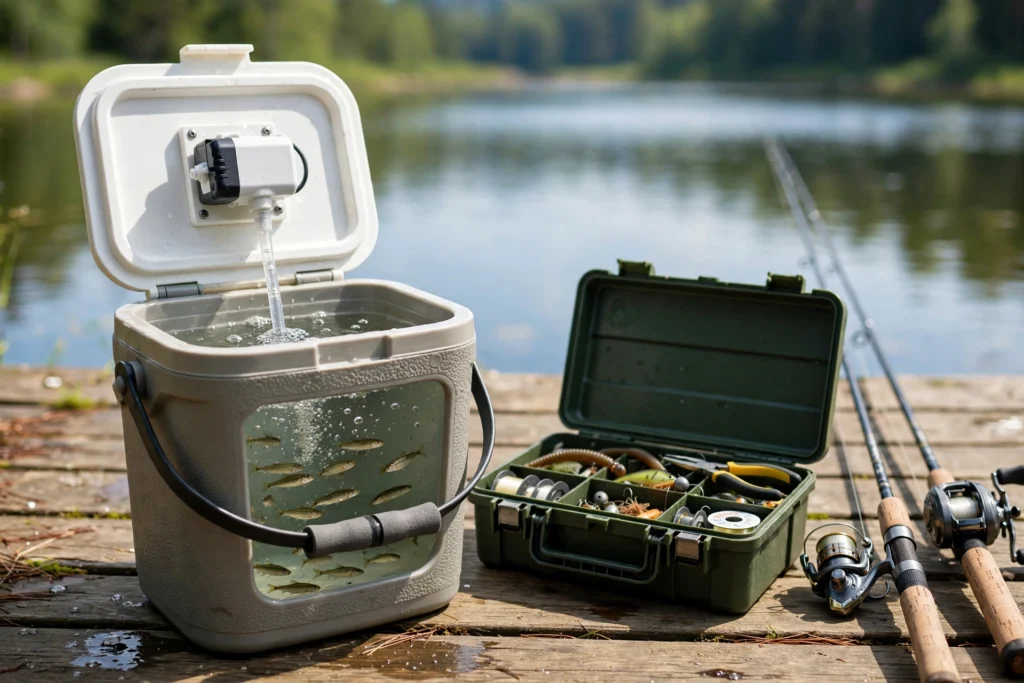
Live bait is only as good as the water it swims in. For tackle shops, bait dealers, charter operations, and fishing camps, bait buckets are a consumable line item that directly affects how many minnows, shiners, leeches, and crawlers survive the day — and every dead bait is lost margin.
Buying bait buckets wholesale cuts per-unit cost and keeps spares on the shelf, but the cheapest bait buckets wholesale deal is rarely the best value. This guide compares the aerated and insulated bait bucket options on the market in 2026, what sizes make sense for different operations, and how to buy in bulk without getting stuck with buckets that leak, crack, or can’t hold temperature.
What Makes a Bucket a “Bait Bucket”
A bait bucket is built around one job: keeping live bait alive for hours (or days) between water changes. Three features separate a real bait bucket from a plain pail: (1) Aeration — a clip-on or built-in aerator pumps oxygen into the water. Warm, still water depletes oxygen fast, and overcrowded bait dies quickly without it.
(2) Insulation — foam-insulated walls (typically around 1 inch) keep water cool in summer heat and slow freezing in winter. Cold water holds more oxygen than warm water, so insulation and aeration work together. (3) Bait access — most lids include a flip-up hatch or molded slots so you can net bait without removing the lid, plus brackets that hold the aerator, hose, and air stone in place.
The Main Types of Bait Buckets (and Who Each Suits)
Foam-insulated minnow buckets
The classic tackle-shop bait bucket. Styrofoam or foam-insulated plastic walls keep water temperature stable for hours. Simple, light, and inexpensive — a basic foam bait bucket can retail for under $8 — which makes them a strong bulk buy for shops that hand bait to walk-in customers. Downside: foam dents and cracks with rough handling, so expect a shorter service life than hard plastic.
Hard-plastic aerated bait buckets
Hard-shell buckets with insulated liners, accessory lids, and clip-on battery aerators. The Frabill Dual Bait Bucket (1.3-gallon) is a good example of the category: it includes a clip-on portable aerator, an insulated liner, and a lid compartment that stores worms separately from minnows, and it retails around $40. These suit guides and serious anglers who need bait alive all day and are willing to pay for durability. For bulk buyers, they carry the best margins per unit.
5-gallon bait aeration systems
Built on the standard 5-gallon bucket footprint, these pair a foam-insulated bucket with a dual-power aerator. The Flambeau 5-gallon bait aeration system, for example, uses 1-inch foam-insulated walls and a 12V/110V aerator rated for up to 40 hours of run time on two D-cell batteries, retailing around $22–$23. The 5-gallon size holds enough water to buffer temperature swings and dilute waste — the single biggest factor in bait survival. Shops selling to charter captains and ice anglers move a lot of these.
Collapsible bait buckets
EVA or fabric-sided buckets that fold flat for storage. Frabill collapsible bait buckets run roughly $40 without an aerator and $60 with one. They solve the storage problem for boat shops and traveling anglers, but the flexible walls insulate less than foam, so pair them with aeration and shade.
Comparison Table: Bait Bucket Types at a Glance
| Bucket type | Typical capacity | Aerator included? | Insulation | Typical retail (2026) | Best bulk buyer |
|---|---|---|---|---|---|
| Foam-insulated minnow bucket | 2–8 qt | No (add-on) | Foam, excellent | Under $8–$21 | Bait shops selling to walk-ins |
| Hard-plastic aerated bucket | 1.3–4.25 gal | Yes (clip-on) | Insulated liner | ~$40–$48 | Tackle shops, guide outfitters |
| 5-gallon bait aeration system | 5 gal | Yes (dual power) | 1″ foam walls | ~$22–$23 | Charter & ice-fishing suppliers |
| Collapsible bait bucket | 3–5 gal | Optional | Minimal | ~$40–$60 | Boat/marine dealers |
Buying Bait Buckets Wholesale in Bulk: What to Ask Your Supplier
Bait buckets wholesale are a volume game. Before placing a bulk order, confirm these details: Minimum order quantities (MOQs): entry-level foam buckets often start at dozens, while branded hard-shell systems may require case quantities. When buying bait buckets wholesale, stock a mix: high-turnover foam buckets plus higher-margin aerated models.
Material and food-contact safety: bait buckets hold living animals in water, so ask for HDPE or food-grade-rated plastics where available, and avoid buckets with recycled content of unknown origin. Lid compatibility: if you stock gamma seal lids or standard snap lids for 5-gallon buckets, check which bait systems share that footprint — shared lids simplify your inventory. Aerator sourcing: battery aerators (D-cell or USB rechargeable) are a natural add-on sale for bait buckets wholesale buyers.
When selling bait buckets wholesale, bundling a bucket with an aerator and air stone lifts the average ticket. Seasonality: bait bucket demand peaks with fishing season and ice season. Order foam and insulated stock before spring so you’re not chasing freight in May.
Keeping Bait Alive: The Rules That Matter More Than the Bucket
The best bucket in the world can’t save bait in bad water. Share these rules with your customers — it’s the kind of advice that brings them back to your counter: Stock lightly: as a rule of thumb, about a dozen minnows per gallon of water; aeration and cool water let you stretch that, crowding and heat shrink it. Keep water cool: shade the bucket, add small amounts of ice or frozen water bottles in summer (avoid chlorinated ice melt directly in the water).
Change water regularly: in warm weather, refresh the water every few hours or when it looks cloudy. Match the water: bait caught or bought in lake water does best in lake water; sudden switches to chlorinated tap water shock and kill bait. Check local bait-transport rules: many states restrict moving live bait between waters to slow invasive species — regulations change, so point customers to their state agency before they travel.
Cleaning and Maintaining Bait Buckets
Rinse buckets with clean water after every use and let them dry fully to prevent bacterial film, which is a leading cause of bait die-off. Avoid scented soaps and bleach residue — if you disinfect, use a diluted unscented cleaner and rinse thoroughly. Replace cracked foam liners and worn aerator stones; a $8 air stone is cheaper than a bucket of dead minnows.
Frequently Asked Questions
How long do minnows live in a bait bucket?
With aeration, cool water, and light stocking, minnows commonly survive a full fishing day and often several days. Without aeration in warm weather, expect die-off within a few hours — oxygen depletion is the usual cause.
What size bait bucket do I need for a day of fishing?
For casual use, a 2–4 quart foam bucket covers a few dozen minnows for half a day. Guides and all-day anglers should step up to 4–5 gallons, which buffers temperature and waste far better.
Are aerated bait buckets worth the extra cost?
If you fish in warm weather or keep bait for more than a few hours, yes. Aeration is the single biggest upgrade to bait survival, and battery aerators cost roughly $20–$25 — far less than replacing dead bait repeatedly.
Can I use a regular 5-gallon bucket as a bait bucket?
Yes, with additions: an aerator with an air stone, a lid with an access hatch, and ideally insulation. Purpose-built bait systems bundle all of this, which is why they outsell plain buckets for live-bait use.
How many minnows can I put in a gallon of water?
About a dozen minnows per gallon is a safe rule of thumb. Aeration, cool water, and frequent water changes let you stock a bit heavier; heat and crowding demand lighter stocking.
How do I keep bait alive overnight?
Aerate continuously, keep the bucket cool and shaded (a garage or basement works), stock lightly, and change the water before bed and again in the morning. Battery aerators with 30+ hour run times handle overnight duty easily.
Get Bait Buckets in Bulk from ThoseBucketPeople
Whether you run a tackle shop, bait dealership, or charter operation, we supply bait buckets wholesale in the sizes commercial buyers actually use — including 5-gallon buckets that pair with aeration systems, 2-gallon buckets for compact setups, and lids to match. Request a quote through our Get a Quote page or contact us for volume pricing and delivery options.